


Last Updated: October 23, 2026
Quick Summary
A perimenopause skincare routine for dryness focuses on barrier repair, intentional hydration, and non-irritating actives that work with sensitive skin. Start with a gentle cleanser, apply hydrating ingredients like hyaluronic acid to damp skin, and seal everything in with a nourishing oil serum containing bakuchiol, squalane, and antioxidants to address both dryness and dehydration.
- 64% of perimenopausal and menopausal women reported dry skin due to declining estrogen affecting hydration at a cellular level.
- Bakuchiol delivers retinol-like resurfacing benefits for fine lines and texture without causing irritation, redness, or peeling.
- Layer products from thinnest to thickest: hydrating toner on damp skin, then oil serum, then optional moisturizer if needed.
- Avoid hot water, over-exfoliation, multiple actives layered together, and harsh cleansers that strip your barrier.
- Skin improvement takes 4-6 weeks of consistent use; commit to the routine before assessing results.
Table of Contents
- Why Perimenopause Changes Your Skin
- Understanding Perimenopause Dry Skin Routine Fundamentals
- Bakuchiol for Sensitive Skin: Your Non-Irritating Retinol Alternative
- Skincare Ingredients for Dry Skin That Actually Work
- How to Hydrate Dry Skin: Your Morning Routine
- Your Evening Routine for Repair and Resilience
- Common Mistakes That Worsen Perimenopause Dryness
- When to Seek Professional Guidance
- Frequently Asked Questions
Why Perimenopause Changes Your Skin
Perimenopause brings real changes to your skin. As estrogen levels drop, your skin loses moisture, elasticity, and resilience, and dryness stops responding to your old routine.
According to research on menopausal skin changes, declining estrogen affects skin texture, firmness, and hydration at a cellular level. A survey found that 64% of perimenopausal and menopausal women reported dry skin, and 56% reported itching.
This is why a generic skincare routine stops working in your 40s. At Dr. Noor Essentials, we've designed products specifically for this phase. A perimenopause skincare routine for dryness focuses on barrier repair, intentional hydration, and non-irritating actives that work with sensitive skin, not against it.
Understanding Perimenopause Dry Skin Routine Fundamentals
A solid perimenopause skincare routine for dryness starts with three principles: simplicity, barrier support, and intentional ingredients.
Skip the complexity. More products don't mean better results. Layering too many actives or stripping cleansers damages the barrier further. Your skin in perimenopause needs less, not more.
Support your barrier. The skin barrier is your first line of defense against irritation and moisture loss. When estrogen drops, this barrier weakens. Your routine should rebuild it using ceramides, squalane, and other barrier-supporting ingredients.
Choose non-irritating actives. Retinol is powerful, but it causes irritation, exactly what perimenopausal skin doesn't need right now. Bakuchiol offers the same resurfacing benefits without the redness, peeling, or sensitivity.
Dryness vs. Dehydration: Know the Difference
Dry skin feels tight, rough, or flaky. It lacks oil production.
Dehydrated skin lacks water, not oil. Even oily skin can be dehydrated. Signs include dullness, more pronounced fine lines, and tightness after cleansing.
Perimenopause typically causes both. Hormonal shifts reduce sebum production (dry skin), while the compromised barrier loses water (dehydration). Your routine needs to address both at once.
The fix: Use a gentle cleanser, apply hydrating ingredients like hyaluronic acid, and seal everything in with a nourishing oil or moisturizer. This three-step approach handles dryness and dehydration together.
Bakuchiol for Sensitive Skin: Your Non-Irritating Retinol Alternative
Bakuchiol is described as "nature's retinol" because it delivers similar results, resurfacing fine lines, improving texture, and boosting radiance, without the irritation.
Retinol speeds up cell turnover, which is powerful but causes redness, peeling, and sensitivity. Perimenopausal skin is already irritated, so adding retinol often makes things worse.
Bakuchiol supports skin renewal without triggering inflammation, so you get smoother texture and reduced fine lines without the barrier damage retinol causes.
Essential Glow is our oil serum built around bakuchiol. It combines bakuchiol with squalane for deep hydration, COQ10 as an antioxidant, and cloudberry oil, an arctic berry rich in vitamin C.

The result: visible improvement in fine lines and texture without the redness or peeling retinol demands.
Skincare Ingredients for Dry Skin That Actually Work
Not all hydrating ingredients are equal.
Emollients soften and smooth. They fill the gaps between skin cells.
Occlusives seal moisture in. These form a protective layer that slows water loss. Many oils and richer moisturizers act as partial occlusives.
Antioxidants support resilience. COQ10 is an antioxidant that supports skin resilience. It protects against environmental stress and supports the skin's natural repair processes.
How to layer them: humectant first (on damp skin), then emollient, then occlusive. In practice, a hydrating toner or serum (humectant) followed by an oil serum like Essential Glow (emollient plus antioxidant plus bakuchiol) covers all three functions in two steps, which is why a minimalist routine can work as well as a multi-product one.
Introducing potentially irritating actives when skin is dry. Retinol and other resurfacing actives often cause redness, peeling, and barrier damage on dry, sensitive perimenopausal skin.
The American Academy of Dermatology guidance on menopausal skin emphasizes moisturizers with hyaluronic acid or glycerin, paired with gentle cleansing.
Skip these in perimenopause:
- Harsh sulfate cleansers (they strip your barrier)
- Excessive exfoliation (more than once or twice weekly damages sensitive skin)
- Multiple actives layered together (your barrier can't handle it)
- Fragrance (it irritates reactive skin)
How to Hydrate Dry Skin: Your Morning Routine
Your morning routine should take 3-5 minutes and focus on hydration and protection. What separates a routine that works from one that doesn't is usually the sequence, the amount, and the timing. Here's a sequenced morning routine for perimenopausal dryness.
Step 1: Cleanse gently (about 60 seconds) Use a mild, cream-based cleanser, roughly a nickel-sized amount, or a pea-sized amount for a concentrated gel. Avoid soap and hot water, which strip your barrier; lukewarm water is best. Pat dry gently.
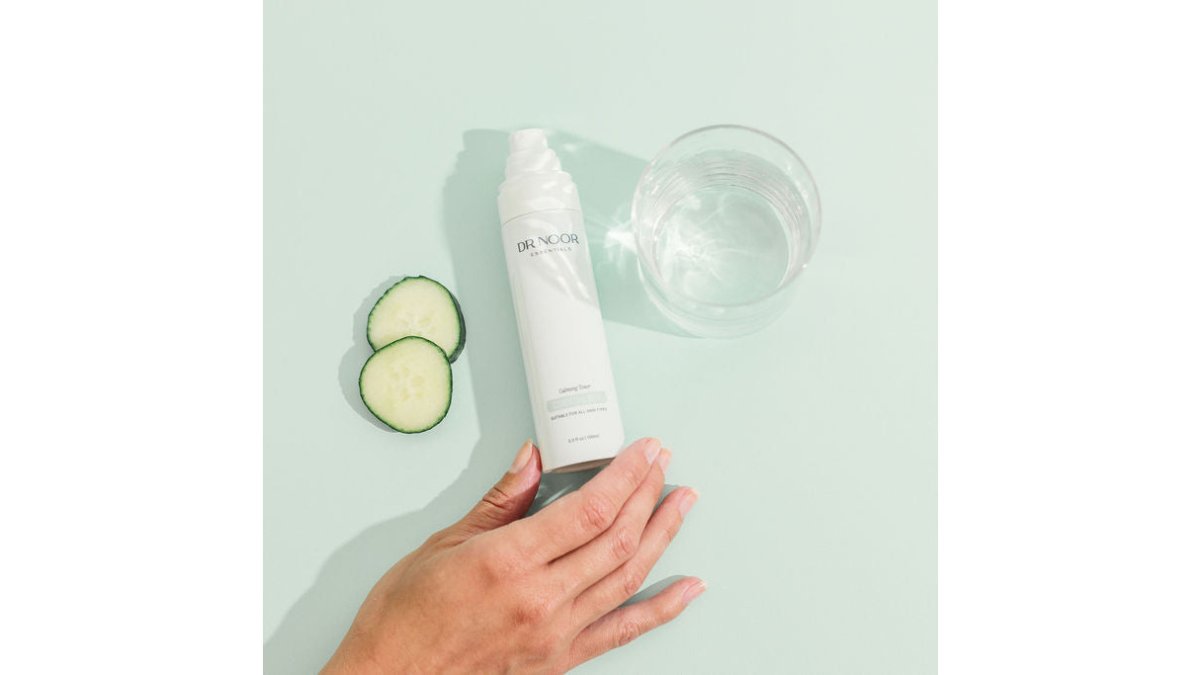
Step 2: Apply a hydrating toner or serum to damp skin (about 30-60 seconds) Apply a hydrating toner or serum while skin is still slightly damp, within about a minute of patting dry, to lock in water. Essential Mist is a calming, hydrating toner designed for dry, sensitive skin.

Step 3: Apply your oil serum (about 60 seconds) Apply 3-4 drops of Essential Glow, our bakuchiol oil serum, to face and neck, pressing it in gently rather than rubbing. It hydrates, supports barrier repair, and begins working on fine lines and texture; squalane and cloudberry oil seal in moisture while bakuchiol gently resurfaces. Because Essential Glow combines a serum with a moisturizer, this single step simplifies your routine, less is more.
Step 4: Moisturize only if needed (about 30 seconds) If skin still feels tight after the oil serum, add a lightweight moisturizer; otherwise the oil serum is enough.
Step 5: Sunscreen (recommended whenever you'll be outdoors) If you're going outside, apply a mineral sunscreen, about a nickel-sized amount for face and neck, or roughly the length of two fingers. Sun damage accelerates aging, and perimenopausal skin is more vulnerable to environmental stress. Treat this as a standard step unless you're indoors with no window exposure.
Your Evening Routine for Repair and Resilience
Your evening routine is where repair happens. Skin cell turnover peaks at night. This is your chance to support that process.
Step 1: Cleanse thoroughly (1-2 minutes) Remove the day's dirt, oil, and sunscreen with a gentle cleanser. If you wore makeup, double cleanse: oil cleanser first, then a water-based cleanser.
Step 2: Apply hydrating toner (1 minute) Apply Essential Mist to damp skin. This preps your barrier for the actives coming next.
Step 4: Apply a richer moisturizer (optional, 1 minute) If your skin still feels tight, add a heavier moisturizer.
Total time: 4-5 minutes.
Consistency matters more than complexity. Use this routine every night; skin improvement takes 4-6 weeks. Fine lines fade gradually, texture smooths over time, and dullness lifts as your barrier strengthens.
Common Mistakes That Worsen Perimenopause Dryness
Mistake 1: Using hot water Hot water strips your barrier. Lukewarm water alone can reduce dryness significantly.
Mistake 2: Over-exfoliating Exfoliating more than twice weekly damages sensitive, perimenopausal skin.
Mistake 3: Layering too many actives Retinol, vitamin C, AHAs, BHAs, using multiple actives at once overwhelms your barrier. Perimenopause calls for simplicity.
Mistake 4: Skipping the oil step Oil-phobic routines don't work in perimenopause. Your skin needs lipids to repair. Squalane-based oils are lightweight and absorb quickly.
Mistake 5: Inconsistency Skincare results take time. Using a routine for two weeks, then switching, means your skin never stabilizes.
Mistake 6: Ignoring your barrier Your barrier is everything in perimenopause. Stripping cleansers, harsh actives, or skipped moisturization keep it compromised. Barrier-first routines work.
When to Seek Professional Guidance
Most perimenopausal dryness improves with a solid home routine. But some situations need professional assessment.
See a dermatologist if:
- Dryness persists despite consistent routine use for 8+ weeks
- Itching is severe or affects sleep
- You develop rashes, hives, or signs of dermatitis
- Dryness is accompanied by significant acne or other skin conditions
- You're unsure whether your skin is dry, dehydrated, or irritated
A dermatologist can assess your barrier, rule out conditions like eczema or rosacea, and recommend prescription treatments if needed.
When to see your primary care doctor: Severe itching or skin changes can sometimes signal systemic issues. If dryness is accompanied by other menopausal symptoms that concern you, mention it to your doctor. They can assess whether hormone therapy or other treatments might help your skin.
Frequently Asked Questions
What is the best skincare routine for perimenopause dryness?
A perimenopause skincare routine for dryness should focus on gentle cleansing, hydration, and barrier support. Start with a mild cleanser, follow with a hydrating toner, apply a serum with non-irritating actives like bakuchiol, and seal with a nourishing moisturizer or oil serum. The American Academy of Dermatology recommends applying moisturizer after bathing and whenever skin feels dry. A minimalist approach, using fewer, purposeful products, often works better than complex routines when skin is reactive.
Can bakuchiol be used in a routine for dry or sensitive skin during perimenopause?
Yes. Bakuchiol works without the irritation that retinol causes, making it ideal for perimenopausal skin that is dry or sensitive. It helps improve the appearance of fine lines and texture while supporting skin resilience. Unlike retinol, bakuchiol does not increase photosensitivity or require a slow introduction period, so you can use it daily from the start. Essential Glow combines bakuchiol with squalane for hydration, COQ10 as an antioxidant, and cloudberry oil for vitamin C, creating a formula designed specifically for perimenopausal skin without irritation.
What ingredients help with dry, sensitive skin during perimenopause?
Key ingredients for perimenopausal dry skin include hyaluronic acid and glycerin for hydration, ceramides to support skin barrier function, and antioxidants like vitamin C and COQ10 to address dullness. Squalane mimics skin's natural oils and provides deep hydration without heaviness. Bakuchiol offers gentle resurfacing without irritation.
How long does it take to see results from a perimenopause skincare routine?
Most people notice improved hydration and skin feel within 2-4 weeks of consistent use. Fine lines, texture, and dullness typically show visible improvement over 8-12 weeks with regular application. Results depend on product consistency, skin barrier health, and the specific concerns being addressed. A customer using Essential Glow reported that her skin felt 'noticeably smoother, more hydrated, and has a glow' she hadn't achieved with other products. Patience and adherence to a simplified routine yield better results than frequent switching.
Perimenopause dryness is real, but it's manageable. The key is a routine that supports your barrier, hydrates deeply, and uses non-irritating actives. Essential Glow, with its bakuchiol, squalane, COQ10, and cloudberry oil, is designed for exactly this phase. It combines serum and moisturizer benefits in one minimalist step. Shop Essentials and build the simple, effective routine your perimenopausal skin deserves.


