


Last Updated: October 28, 2026
Quick Summary
Minimal skincare can improve skin texture when texture is caused or worsened by irritation, dryness, or product overload, since a simple routine you actually follow beats a complex one you abandon. It is least likely to be enough when the cause is congestion, pigment, or scarring. Most people see early changes in four to six weeks, with clearer shifts around three months.
- A minimal skincare routine for textured skin has four steps and no more.
- Introduce one new product at a time and give it two weeks before adding the next.
- Apply products thinnest to thickest, with sunscreen always last in the morning.
- Track progress with photos in the same light and angle, once a week.
- If texture hasn't budged after three months of consistency, the answer may be an added step.
Table of Contents
- What Skinimalism Actually Means for Skin Texture
- Can Minimal Skincare Improve Skin Texture? What the Evidence Shows
- Building a Minimal Skincare Routine for Textured Skin
- Bakuchiol for Skin Texture: Resurfacing Without the Retinol Burn
- How Long Does It Take to Improve Skin Texture?
- A Skincare Routine for Perimenopause Skin That Won't Flare Up
- When Fewer Products Isn't Enough
- Start With Two Products, Not Ten
- Frequently Asked Questions
What Skinimalism Actually Means for Skin Texture
Skinimalism is a pared-back approach to skincare that uses fewer products, each chosen for a specific job. The goal isn't deprivation. It's removing steps that don't add anything useful.
Texture is where this gets interesting. At Dr. Noor Essentials, we built our entire line around fewer formulas, each one purposeful.
A U.S. survey reported that 59% of respondents preferred skincare products made from natural or organic ingredients, according to Market.us skincare statistics. That preference pairs well with a simpler routine, because fewer products means fewer ingredient lists to read.
Can Minimal Skincare Improve Skin Texture? What the Evidence Shows
What does exist is solid research on consistency and barrier support. A randomized, investigator-blinded study of 52 participants with moderate-to-severe dry skin found that a simple regimen of a mild cleanser and moisturizer produced objective and subjective improvements. Thirty-nine participants followed the treatment routine. The lesson: a routine you actually follow beats a complex one you abandon.
When Simplifying Helps, and When It Won't Be Enough
A U.S. survey reported that 59% of respondents preferred skincare products made from natural or organic ingredients, according to Market.us skincare statistics. That preference pairs well with a simpler routine, because fewer products means fewer ingredient lists to read, and fewer chances for an irritating ingredient to hide in step seven.
Building a Minimal Skincare Routine for Textured Skin
A minimal skincare routine for textured skin has four steps and no more. Each one earns its place by doing something the others can't. The unique part is not the list, it's the order, the introduction schedule, and knowing what to do when skin pushes back.
The Four Steps, in Order
Order matters. Thinnest to thickest, always. A water-based serum goes on before an oil or cream, and sunscreen is always the last step in the morning because it needs to sit on top to work.
A Morning and Evening Plan
| Step | Morning | Evening | Notes |
|---|---|---|---|
| Gentle cleanser | Yes | Yes | Lukewarm water; pat, don't rub, dry |
| Resurfacing serum | Optional | Yes | Start every other night, build to nightly |
| Moisturizer | Yes | Yes | More if skin feels tight |
| Sunscreen | Yes | No | Reapply with sun exposure |
How to Introduce a Resurfacing Step Without Over-Exfoliating
- Introduce one new product at a time and give it two weeks before adding the next. If something goes wrong, you'll know exactly what caused it.
Choosing Products for Your Skin Type
Consistency beats intensity. A serum used daily for eight weeks outperforms one used sporadically for six months.
How to Track Progress Realistically
Texture change is gradual. Most people see early changes in four to six weeks, with clearer shifts around three months, and cell turnover slows with age. Track it with photos in the same light and same angle, once a week. Judge texture, not mood, compare the surface of the skin, not how you feel about it that day.
Bakuchiol for Skin Texture: Resurfacing Without the Retinol Burn
Bakuchiol for skin texture is a focus of Essential Glow. It's often called nature's retinol.
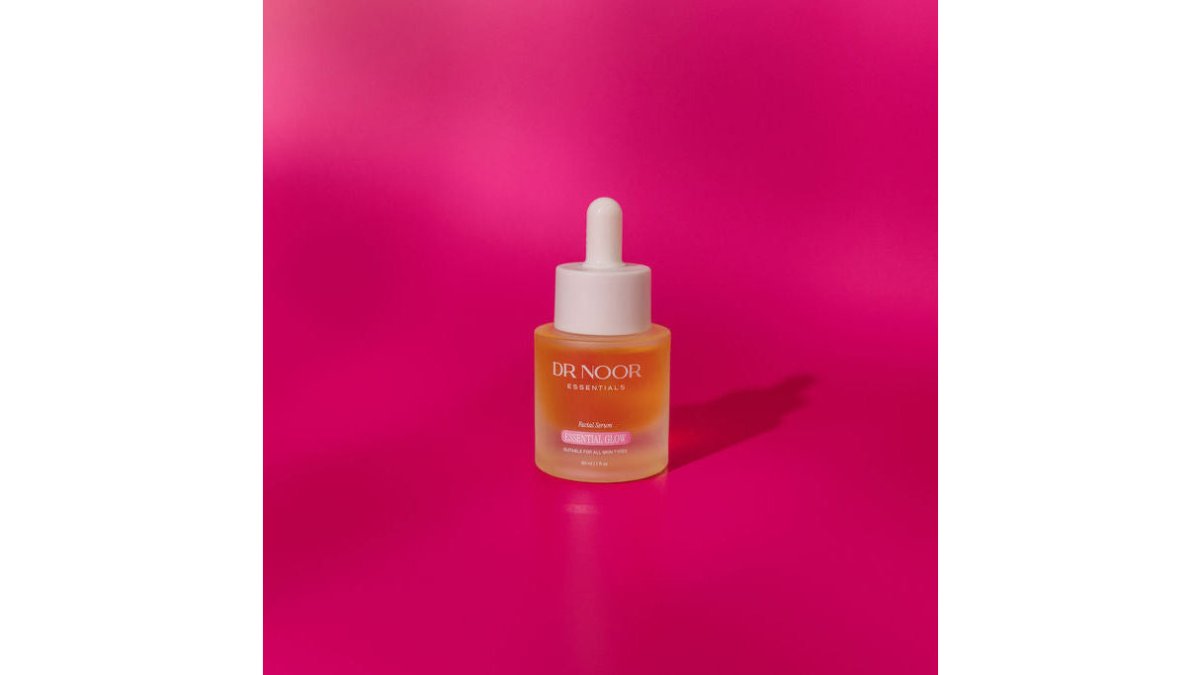
Our Essential Glow pairs bakuchiol with squalane for hydration, CoQ10 as an antioxidant, and cloudberry oil, an arctic berry rich in vitamin C. It works as a serum and a moisturizer in one step. That's the minimalist idea in a single bottle. It is not medical-grade skincare, and it isn't meant to be.

One Essential Glow customer, Janet, put it simply: "My skin feels noticeably smoother, more hydrated, and has a glow I haven't been able to achieve with other products."
How Long Does It Take to Improve Skin Texture?
Track progress with photos in the same light, same angle, once a week. Judge texture, not mood.
If you're also dealing with dullness, our guide on how to fix dull skin in your 40s without irritation walks through a gentle routine built for exactly that.
A Skincare Routine for Perimenopause Skin That Won't Flare Up
A skincare routine for perimenopause skin should calm first and resurface second. Hormonal shifts thin the barrier, so skin that tolerated everything at 35 may sting at 48.
When Hormonal Breakouts and Dryness Show Up Together
For a fuller step-by-step, see our skincare routine for perimenopausal skin.
When Fewer Products Isn't Enough
Sometimes a minimal routine stalls. If texture hasn't budged after three months of consistency, the answer may be an added step, not a removed one. A dermatology review of layered regimens notes that routines combining cleanser, moisturizer, sunscreen, and a resurfacing active showed improvements in hydration, texture, and pigment.
Start With Two Products, Not Ten
The Everyday Essentials duo pairs Essential Glow with Essential Mist, a calming spray of aloe, chamomile, green tea, and minerals that refreshes.

For anyone building a pared-back plan, our minimalist skincare routine for mature skin guide goes deeper on product selection.
Frequently Asked Questions
Can a minimal skincare routine improve skin texture?
Whether a minimal routine improves texture depends on the products in it and the skin concern.
Is bakuchiol gentler than retinol for fine lines and uneven texture?
Bakuchiol is often described as nature's retinol. Essential Glow pairs bakuchiol with squalane for hydration, CoQ10 as an antioxidant, and cloudberry oil, an arctic berry and source of vitamin C, in one oil serum that also moisturizes. It is not medical-grade skincare.
How long does it take to improve skin texture with a simple routine?
Give it at least one full skin cycle, roughly four to six weeks, before judging texture changes, and closer to eight to twelve weeks for fine lines and tone. Track progress with a photo taken in the same light each week rather than judging from the mirror daily. If you are using bakuchiol for skin texture, the goal is steady improvement without irritation. Stop and reassess if you see redness, stinging, or flaking, since those signal a product conflict rather than progress.
How do I simplify my routine during perimenopause without losing results?
Essential Mist is a calming spray containing aloe, chamomile, green tea, and minerals. Essential Glow is an oil serum that combines a serum with a moisturizer.
Your skin has changed, and your routine should change with it. Dr. Noor Essentials formulates with a physician-led, science-first approach: purposeful ingredients, no filler, and formulas designed for women's skin through every stage. Essential Glow brings bakuchiol, squalane, CoQ10, and cloudberry oil together in one non-irritating step, while Essential Mist adds calm hydration on demand. Get started with Dr. Noor Essentials and give your skin fewer, better products to work with.


