


Last Updated: October 25, 2026
Quick Summary
To fix dull skin in your 40s without irritation, build a simple routine that cleanses gently, hydrates on damp skin, and finishes with broad-spectrum SPF 30 or higher every morning. Add gentle chemical exfoliation just once or twice weekly, and choose bakuchiol if retinol causes redness or stinging.
- Dull skin in your 40s usually comes from hormonal shifts plus slower cell turnover, not one single cause.
- Exfoliate only once or twice weekly with chemical exfoliants like lactic acid, not gritty scrubs.
- Introduce one new product at a time and give it two weeks before adding anything else.
- Bakuchiol is a plant-derived ingredient called nature's retinol that resists irritation but works more slowly.
- Brighter-looking skin usually takes four to eight weeks of consistent use.
Table of Contents
- Why Your Skin Looks Dull in Your 40s
- Dull Skin Causes in Your 40s You Can Actually Address
- Step 1: Build a Simple Skincare Routine for Radiant Skin
- Step 2: Try Gentle Exfoliation for Mature Skin
- Step 3: Choose Bakuchiol for Mature Skin That Reacts to Retinol
- Step 4: Add Antioxidants and Daily Sunscreen
- How Long Until You See Brighter-Looking Skin
- Start With Essential Glow and One Simple Ritual
- Frequently Asked Questions
Why Your Skin Looks Dull in Your 40s
Dull skin in your 40s rarely comes from one thing.
That combination is why the usual advice, "just exfoliate more," often backfires. At Dr. Noor Essentials, we take a different view. The goal is not to strip the surface harder.
Below, we'll show you exactly how to fix dull skin in your 40s with a short, gentle routine. We will also cover how to spot what's actually causing your dullness, and how long real results take.
Dull Skin Causes in Your 40s You Can Actually Address
Dull skin is a loss of light reflection at the surface. It happens when dead cells build up, oil and water levels drop, and skin tone turns uneven. Most cases in your 40s trace back to two causes you can work on.
Hormonal Shifts and Perimenopause
Perimenopause changes how skin behaves. Estrogen levels move up and down, and skin often becomes drier, thinner, and more easily irritated. Redness and stinging show up more often than they used to.
That matters because irritated skin looks dull. When the barrier is stressed, light scatters instead of reflecting. So the fix is not more actives. It is fewer, gentler ones.
Surface Buildup and Slower Cell Turnover
Cell turnover is the process where fresh skin cells rise to the surface and replace old ones. It slows with age. Dead skin cells then sit on the surface longer, creating rough texture and a grayish cast.
Other contributors worth checking:
- Dehydration from indoor heat, low water intake, or harsh cleansers
- Sun damage built up over decades, which shows as uneven tone
- Sleep and stress, both of which slow skin recovery
If your skin stings when you apply products, stop and read the next section carefully.
Step 1: Build a Simple Skincare Routine for Radiant Skin
A simple skincare routine for radiant skin is not a shorter version of a ten-step shelf.
Most practitioners find that a routine built around three functions, cleanse, hydrate and support, and protect, covers the dullness basics better than a stack of single-purpose serums. Here is how that looks across a full day.
Morning:
- Rinse with lukewarm water or a mild, non-foaming cleanser. Hot water and foaming surfactants strip the barrier and leave skin tight, which reads as dull by mid-morning.
- Apply a hydrating serum or oil while skin is still slightly damp, so water is sealed in rather than evaporating off.
- Finish with broad-spectrum sunscreen, SPF 30 or higher, every morning, indoors or out.
Evening:
- Cleanse gently to remove sunscreen, sweat, and surface buildup. If you wore heavy sunscreen, a second gentle cleanse is fine, but skip anything that leaves skin squeaky.
- Apply your serum or oil. If you are using an exfoliant, this is the night for it, and only on its scheduled night.
- Stop there. A separate night cream is optional if your serum already combines hydration with moisturization.
That is the whole structure. If you want a ready-made version of this, the Everyday Essentials bundle pairs two products into one morning-and-midday ritual.

Why this order matters. Cleansing first removes the film that blocks absorption. Hydration on damp skin traps water where it can plump the surface. Sunscreen last forms the protective layer that everything else sits under. Reversing the order, or skipping sunscreen because you are indoors, undoes the brightness work the rest of the routine is doing.
What to leave out. Skip daily physical scrubs, alcohol-based toners, and any product that stings on contact.
Barrier support is the quiet step. A routine that keeps the barrier calm looks boring on paper and works better in practice.
Step 2: Try Gentle Exfoliation for Mature Skin
Gentle exfoliation for mature skin means once or twice a week, not nightly, and it means choosing chemical exfoliants over scrubs with grit.
Chemical exfoliant is a liquid or cream that loosens the glue holding dead skin cells together. Lactic acid and other AHAs fall in this group. They are gentler than scrubbing, but they still need restraint, especially on skin that has become more reactive with hormonal shifts.
Match the Exfoliant to the Cause of Your Dullness
Most guides tell you to exfoliate and stop there. The more useful step is figuring out whether exfoliation is even the right answer, because dryness, surface buildup, sun damage, irritation, and hormonal changes all look dull but respond to different things.
- Surface buildup and rough texture. Dead cells sitting on the surface, with a grayish cast and a rough feel to the touch. This is the case exfoliation is actually for. Once or twice weekly is enough.
- Dryness and dehydration. Skin feels tight, looks flat, and may flake at the edges of the nose and mouth. This is a barrier and water problem, not a buildup problem. Exfoliating flaking skin makes it worse. Hydrate first, and exfoliate only after flaking settles.
- Sun damage and uneven tone. Discoloration and patchiness that do not change with exfoliation. This needs daily sunscreen and antioxidant support more than it needs more exfoliation.
If you cannot tell which pattern fits, start with hydration for two weeks. If texture improves, you were dry, not congested. If it does not, a gentle exfoliant is the next step.
A Week-by-Week Introduction Schedule
This is the part most guides skip. Introducing an exfoliant gradually is what separates a routine that works from one that ends in redness and a pause.
| Week | Frequency | What to Watch | What to Do |
|---|---|---|---|
| Week 1 | Once, on a night with no other active | Mild tingling that fades within a minute | Keep the rest of the routine unchanged |
| Week 2 | Once | No redness, no flaking | Continue at once weekly |
| Week 3 | Twice, spaced at least three nights apart | Slight smoothness, no stinging | Hold at twice weekly |
| Week 4 | Twice | Skin feels calm between uses | Stay at twice weekly; do not increase |
| Week 5+ | Twice, or once if skin feels reactive | Any stinging, warmth, or flaking | Drop back to once weekly and hydrate |
When to pause entirely. Stop exfoliating if skin stings when you apply anything, if flaking appears, if redness lasts more than an hour after application, or if you start a new active in the same week.
Sensitive-Skin and Contraindication Cautions
- Rosacea or eczema. Exfoliants can trigger flares. Ask a dermatologist before starting, and patch test on the jawline for three nights.
- Pregnancy or breastfeeding. Some exfoliating acids and retinoids are not recommended. Check with your clinician before adding any active.
- Combining actives. Do not use an exfoliant and a retinoid on the same night. Space them, and never stack two exfoliants in one routine.
If you would rather skip exfoliation altogether, that is a reasonable choice for reactive skin. A gentle resurfacing ingredient like bakuchiol, covered in the next section, offers a slower but calmer path to smoother-looking texture without the sting of an acid.
Step 3: Choose Bakuchiol for Mature Skin That Reacts to Retinol
Bakuchiol for mature skin is the practical answer when retinol causes redness, flaking, or stinging. Bakuchiol is a plant-derived ingredient often called nature's retinol. It helps improve the look of fine lines and rough texture without the irritation retinol is known for (pubmed.ncbi.nlm.nih.gov).
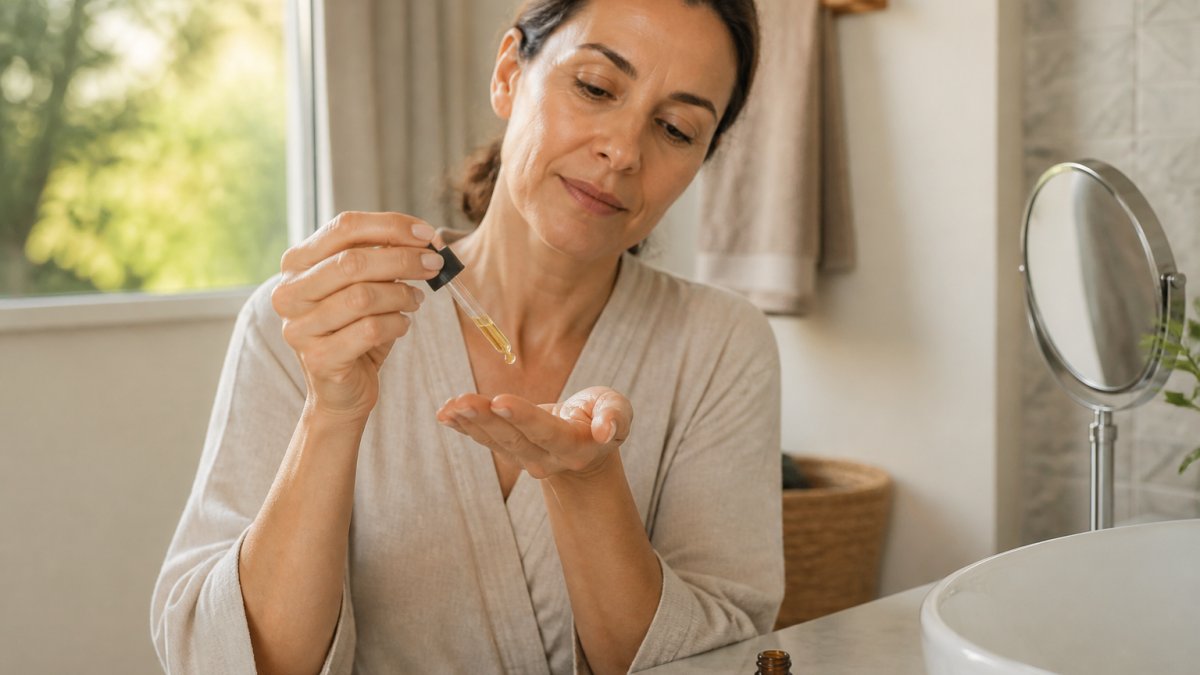
This is where Essential Glow earns its place. It is our bakuchiol oil serum, and it combines a serum with a moisturizer in one step. The formula includes:
- Bakuchiol to help resurface the look of fine lines
- Squalane for hydration
- COQ10 as an antioxidant
It is nonirritating by design and built for perimenopausal and menopausal skin. It is not medical grade skincare, and it does not need to be. You can see the full formula on the Essential Glow product page.

One honest note: bakuchiol is gentler than retinol, which also means results arrive more slowly. Expect improvement in texture over weeks, not days.
Step 4: Add Antioxidants and Daily Sunscreen
Antioxidants and daily sunscreen are the pair that protects every gain you make.
Sunscreen is the non-negotiable step. The American Academy of Dermatology sunscreen guidance recommends broad-spectrum protection as part of any daily routine.
For an easy antioxidant layer, Essential Mist is a calming, hydrating toner that refreshes skin and supports the barrier. A quick mist at midday adds lightweight hydration without disturbing your makeup or your routine.

Layer in this order:
- Cleanse
- Mist or serum
- Moisturizer
- Sunscreen
How Long Until You See Brighter-Looking Skin
Brighter-looking skin usually takes four to eight weeks of consistent use. Cell turnover and barrier repair both run on their own timeline, and no product speeds that up dramatically.
Here is a realistic way to track progress:
- Week 1-2: skin feels less tight and flaking settles
- Week 3-4: texture starts to feel smoother to the touch
- Week 5-8: tone looks more even and light reflects better
Take a photo in the same light every two weeks. Progress is slow enough that memory is unreliable.
| Timeline | What to Expect | What to Do |
|---|---|---|
| Week 1-2 | Less tightness, calmer skin | Keep routine steady |
| Week 3-4 | Smoother texture | Add nothing new |
| Week 5-8 | More even tone, visible glow | Photograph and compare |
| Week 8+ | Continued refinement | Adjust only one step |
If dullness continues past eight weeks of consistent care, or comes with sudden changes in tone or texture, see a dermatologist. Some causes of dullness need professional assessment.
Start With Essential Glow and One Simple Ritual
Fixing dull skin in your 40s does not require a bigger routine.
That is the whole idea behind our line. Essential Glow pairs bakuchiol with squalane, COQ10, and cloudberry oil in one serum-and-moisturizer step.
One customer, Janet, put it simply: "My skin feels noticeably smoother, more hydrated, and has a glow I haven't been able to achieve with other products."
Start with Essential Glow and one simple ritual, morning and night. Get started with Dr.
Frequently Asked Questions
What causes skin to look dull in your 40s?
Dull skin in your 40s usually comes from several things happening at once. Cell turnover slows, so dead skin cells sit on the surface longer and scatter light instead of reflecting it. Perimenopause reduces oil production and moisture retention, which makes skin look flat. Years of sun exposure add uneven tone and rough texture. Hormonal breakouts and irritation can also leave skin looking tired. Identifying which of these applies to you shapes what you change first.
Can bakuchiol help with fine lines without the irritation of retinol?
Bakuchiol is often called nature's retinol because it supports the look of fine lines and rough texture without the flaking, redness, and stinging many people get from retinol. That matters in your 40s and 50s, when skin becomes more reactive with perimenopause. Essential Glow pairs bakuchiol with squalane for hydration, CoQ10 as an antioxidant, and cloudberry oil, a source of vitamin C. It combines a serum and a moisturizer in one step and is designed for skin that does not tolerate retinol.
How often should you exfoliate dull skin in your 40s?
Once or twice weekly is the realistic starting point, and chemical exfoliants such as lactic acid are gentler than harsh physical scrubs. Mature skin thins and loses moisture faster, so over-exfoliating causes redness, flaking, and stinging that make dullness look worse. Introduce one exfoliant at a time, watch how your skin responds for two weeks, and drop back to once weekly if it feels tight or irritated.
How long does it take to see brighter-looking skin from a skincare routine?
Hydration and surface smoothness can look better within a week or two of consistent use. Texture and tone changes typically take longer, so judge progress at four to eight weeks rather than day to day. Take a photo in the same light at the start and again each month. If nothing changes after eight to twelve weeks of steady use, that is the point to see a dermatologist about causes a routine cannot fix.


